Home › Walkway and Pathway Paving
Create safe, attractive paths around your home with asphalt walkway paving in Spokane, WA. We install smooth, even walkways that are easy to shovel and gentle to walk on. From curved garden paths to side yard access routes, our crew handles grading, base prep, and asphalt placement for long lasting results. Request a consultation to design the right pathways for your property.
Precision Asphalt Spokane provides professional asphalt walkway paving throughout Spokane, WA, Washington and the surrounding area. Our licensed, insured crew delivers safe, clean, on-time work with a free estimate before anything begins. Call or request your free quote.
Asphalt Walkway Paving Done Right in Spokane
Asphalt walkways and pathways live in a rough environment in Spokane. Freeze-thaw cycles, snow shovels, tree roots, and heavy foot traffic all work against your surface. Precision Asphalt Spokane focuses on walkway and pathway paving that holds up under local conditions, not just something that looks good on day one.
We install asphalt walkways for homes, apartment communities, HOAs, schools, parks, medical facilities, and commercial sites. Whether you need a simple straight walk from driveway to front door or a curved pathway network through a campus or park, we design with slope, drainage, and Spokane’s climate in mind.
Our approach is practical. We look at how people actually move through a space, where water naturally flows, and what equipment can get into the area without tearing up lawns or landscaping. That informs the walkway layout, thickness, and base preparation so you get a surface that stays smooth and safe instead of settling and cracking after the first hard winter.
How We Build Durable Asphalt Walkways and Paths
A good walkway starts under the asphalt. We begin by evaluating your soil, traffic expectations, and site drainage. In many Spokane neighborhoods, native soils include pockets of clay and rock. If the existing subgrade is soft or holds water, we excavate deeper, then bring in compactable gravel to create a stable base.
For most residential walkways, we excavate 4 to 8 inches below final grade. Commercial or park pathways can require more depth depending on use and ADA standards. We place and compact crushed rock in lifts, typically 2 to 3 inches at a time, using plate compactors or small rollers sized to fit your site. This prevents future settling and trip hazards.
Next we set forms or string lines to control width, elevation, and slope. Walkways are usually 3 to 6 feet wide, depending on how many people will use them side by side. We design cross slopes around 1.5 to 2 percent so water sheds off the surface instead of pooling. On slopes or curves, we adjust the base so the asphalt has uniform support.
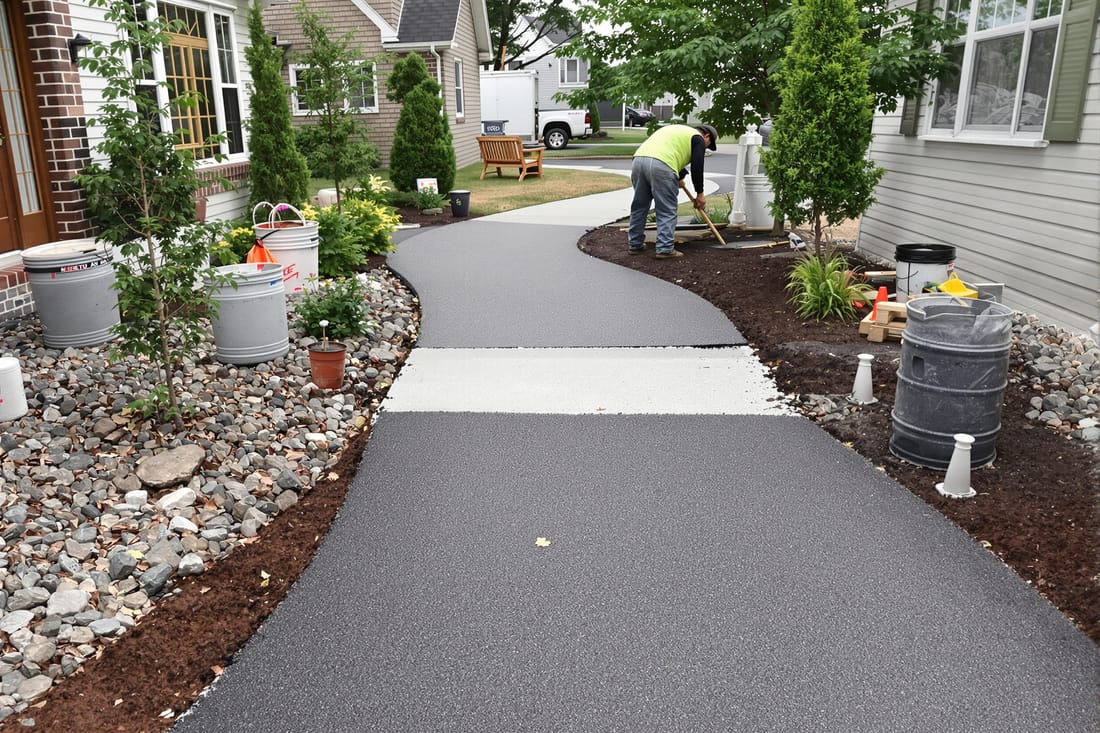
Once the base is shaped and compacted, we place hot mix asphalt at a typical compacted thickness of 2 to 3 inches for pedestrian traffic. For service paths that might see light vehicles, we may increase the thickness. The mix is spread, raked, then compacted while hot. We pay particular attention at tie-ins to steps, stoops, existing concrete, and patios to eliminate lips and abrupt height changes.
Design Options for Walkways and Pathways
Asphalt is more flexible than most people realize. Precision Asphalt Spokane can adjust layout, edges, and finishes so your walkway fits the look of your property instead of looking like a repurposed driveway.
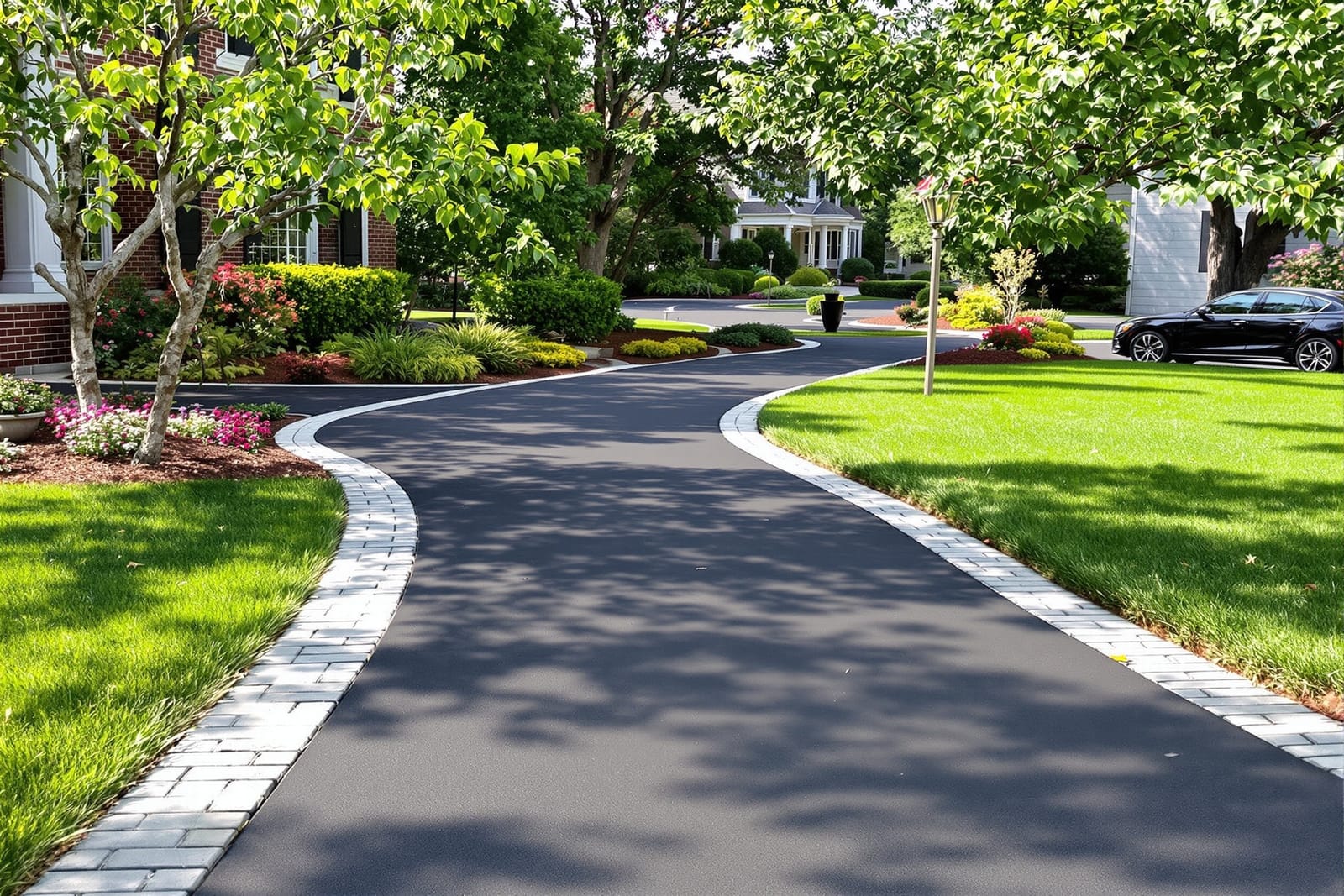
Layout choices include straight runs for efficient access, gentle curves to follow landscaping, and loop paths for parks and large yards. In shaded Spokane yards with lots of pine needles or leaves, we often simplify curves slightly so maintenance is easier and debris can be blown off without catching on tight corners.
Edge treatments matter for both appearance and durability. You can choose:
• Clean cut edge, where the asphalt is neatly trimmed to the lawn line. This works well if you plan to maintain a crisp grass edge.
• Gravel or rock border, useful along fences or buildings where you want separation from siding or to manage splash and runoff.
• Concrete, brick, or paver edging, which gives a more finished look and helps keep the asphalt edge from raveling where there is frequent foot traffic or cart traffic.
We can also vary the surface finish by adjusting rolling patterns. For walkways with frequent winter use, we avoid overly smooth finishes and instead aim for a slightly textured surface that provides traction without being rough on shoes or strollers.
Color options are more limited with asphalt, but we can recommend sealcoat choices that darken, slightly lighten, or add subtle aggregate texture. In high visibility commercial or school settings, we can add striping or markings for directional flow, crosswalk connections, or fire lane outlines where the path meets a drive area.
What Drives Cost for Asphalt Walkway Paving
Pricing for asphalt walkway paving in Spokane depends on more than just square footage. Precision Asphalt Spokane looks at a few key factors before giving you a number.
Access is a big one. If we can get equipment near the work area, costs are lower. Back yard walkways that require moving material through side yards or around structures take more time and labor. Narrow gates, steep slopes, or limited truck access can impact the bid.
Existing conditions matter. Removing old concrete, brick, or failing asphalt adds demo and disposal cost. If the current path has heaved from tree roots, we may need to cut roots, adjust alignment, or install root barrier to prevent the same issue from coming back. Soft spots, old fill, or poor drainage areas may require additional excavation and base rock.
Thickness and use also drive cost. A light duty residential garden path can often be built thinner than a main apartment sidewalk that sees carts, lawn equipment, and frequent deliveries. For multi-family, commercial, or park projects, ADA requirements for width, cross slope, and landings can add grading and fine-tuning work.
Finally, timing and phasing affect pricing. If we are already on site doing your driveway, adding a shorter walkway is usually more economical. If the walkway must be done in tight phases around tenant schedules, business hours, or school activities, we plan for extra mobilizations and protection which will be reflected in the quote.
Common Walkway Problems in Spokane and How We Prevent Them
Spokane’s weather and soil conditions create predictable problems for poorly built walkways. Our crews are used to seeing the same patterns and we design to avoid them.
Frost heave is one of the biggest issues. Water in the soil expands when it freezes and pushes sections of path up. To combat this, Precision Asphalt Spokane makes sure the base is well drained and compacted, and in problem areas we may over excavate and install deeper rock or drainage solutions so water does not sit under the asphalt.
Drainage and icing are another concern. Slightly sunken or flat sections tend to collect water, which then freezes and becomes a hazard. We set consistent slopes during grading and check them repeatedly with levels or lasers. Around downspouts or low yard areas, we may add swales, small drains, or reroute the walkway so water does not run straight across it.
Tree roots crack and lift many older walkways in mature Spokane neighborhoods. Where possible, we adjust the path alignment to stay clear of major roots. When that is not an option, we may install a thicker base, cut select roots according to arborist guidance, or place root barriers. We also avoid placing walkways too close to new tree plantings so roots have space to grow without disturbing the pavement.
On slopes, traction and erosion are the main concerns. We control erosion with proper base compaction and edge support. For traction, we avoid polishing the asphalt too smooth during rolling and can recommend de-icing and snow removal practices that protect the surface while keeping it safe in winter.
What to Expect When You Hire Precision Asphalt Spokane
We keep walkway and pathway projects straightforward so you know what will happen on your property and when. Most residential walkways take one to three days depending on length, site prep, and weather.
First, we meet on site, walk the route, and discuss use, width, and any problem spots such as standing water or steep slopes. We mark utilities and note access points, landscaping, and structures that need protection.
Before paving day, we handle any necessary permits for public connections or work near the right of way, and we coordinate with you on parking, pets, and access to doors or gates that might be affected.
On installation day, we remove any old surfaces, excavate, and build the gravel base. You will see and approve the basic alignment and height before asphalt goes down. Once the base is compacted, we pave and roll the walkway, then tidy up edges and haul away debris.
You can usually walk on the new asphalt within 24 hours, often sooner, depending on temperature. We provide simple maintenance guidelines, such as when to avoid sharp objects at the edges, how to clear snow without gouging the surface, and when to consider sealcoating.
Because we are local, if a section settles or an edge needs touch up, you are not chasing a contractor from out of town. Precision Asphalt Spokane stands behind our workmanship and can return to address concerns, look at future additions, or tie in new paths as your property changes.