Home › Road, Street, and Municipal Paving
Keep traffic moving smoothly with professional road paving in Spokane, WA. We construct and resurface city streets, access roads, and municipal asphalt projects to meet engineering specs and traffic loads. Our team coordinates traffic control, milling, paving, and compaction to minimize disruption and deliver long lasting surfaces. Contact us about upcoming road, street, or municipal paving needs.
Precision Asphalt Spokane provides professional road paving throughout Spokane, WA, Washington and the surrounding area. Our licensed, insured crew delivers safe, clean, on-time work with a free estimate before anything begins. Call or request your free quote.
Road and Municipal Paving in Spokane, Built for Real Traffic and Real Winters
Road paving in Spokane has to handle snow, chains, plows, summer heat, and heavy trucks, often in the same week. At Precision Asphalt Spokane, our approach to streets and municipal work is shaped by those conditions, not by a generic “one spec fits all” template.
For public roads, subdivisions, school zones, and access routes, we start with how the street is actually used. We look at traffic counts, turning movements at intersections, bus routes, garbage truck paths, and where water already pools during storms. A neighborhood cul-de-sac does not need the same pavement structure as an arterial carrying freight, and sizing everything like a highway only wastes your budget.
We work closely with Spokane and Spokane County standards, but we also pay attention to specific locations. Steep Spokane hills, areas with clay soils, and streets that get frequent snowpack are flagged for changes in base depth, asphalt mix, and drainage layout. The goal is fewer potholes and patches over the first 10 to 20 years of the pavement’s life, not just getting through final inspection.
How Road Paving Actually Gets Built, Step by Step
Solid road paving is 80 percent preparation and 20 percent asphalt. On a typical street or municipal project in Spokane, Precision Asphalt Spokane follows a clear sequence that keeps the surface smooth and the base stable.
First comes layout and survey. We verify grades, centerlines, and tie-ins to existing roads so water drains to inlets instead of toward driveways or foundations. On reconstruction jobs, we document existing manhole elevations, valve cans, and curb lines so they can be adjusted to match the finished pavement.
Next is excavation and subgrade preparation. We remove failing asphalt and unsuitable soils, usually to a depth set by Spokane or county standards. If we find pumping clay, organic pockets, or saturated sections, we either over-excavate and replace with crushed rock or, in select cases, use a geogrid to stabilize the area. Skipping this step is how you get early rutting and alligator cracking.
We then install and compact the aggregate base, typically a crushed rock like 5/8 minus or 1 1/4 minus, in lifts. Each lift is compacted with rollers and tested for density. For municipal work, inspectors often witness these tests, and we welcome that. A properly compacted base means the road can carry snowplows and delivery trucks without pumping or settling.
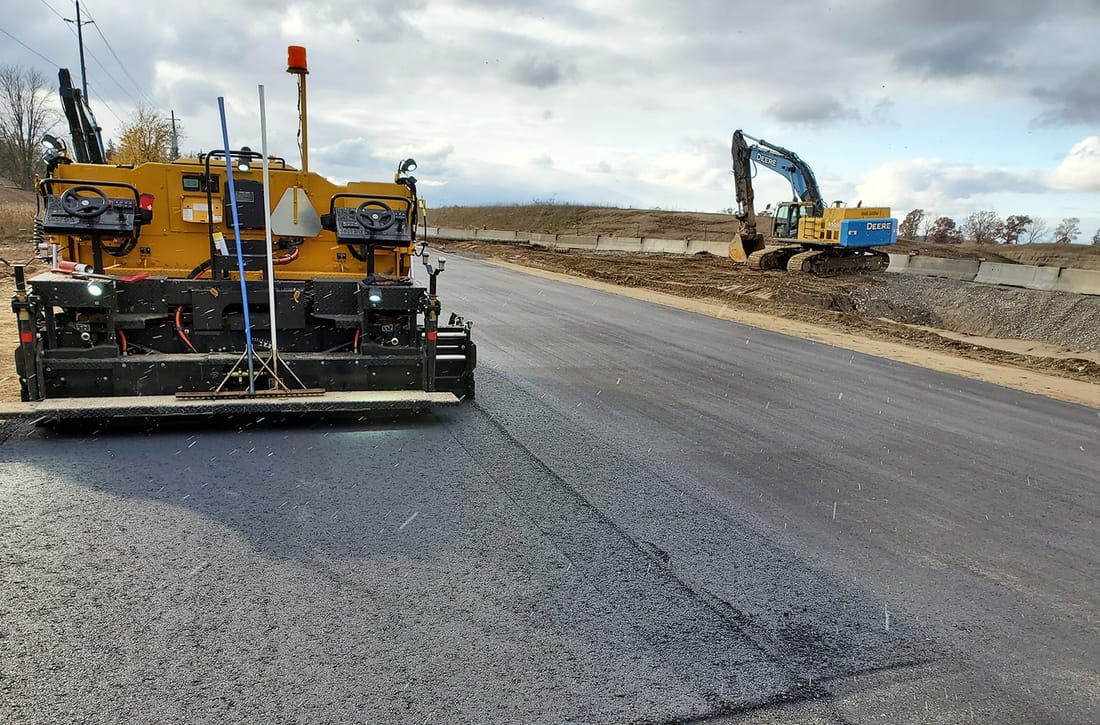
The asphalt paving itself usually happens in at least two lifts. For higher traffic roads we often place a thicker base course with a coarser mix, then a tighter, smoother surface course. We use pavers with automatic grade and slope controls to match design elevations, and we roll while the mix is at the right temperature to lock aggregates together without shoving or leaving roller marks.
Finally, we adjust manholes and utilities to finished grade, cut neat transitions to adjoining streets, and perform a final joint sealing or tack coat where needed. For public streets, we coordinate with striping and signage so the road can open quickly and safely.
Material Options and Mix Designs That Work in Spokane
Not every asphalt mix performs the same in Spokane’s climate. Precision Asphalt Spokane works with suppliers who understand regional conditions, and we specify mixes based on temperature swings, traffic loading, and snow removal practices.
For collectors and arterials that see braking, turning, and bus traffic, we typically recommend a dense graded asphalt with higher stability and rut resistance. The top course may use a smaller nominal aggregate size for smoother ride and better contact with plow blades. In some severe locations, a polymer modified asphalt binder can be worth the added cost because it resists cracking in winter and softening in hot spells.
In residential streets and low speed municipal roads, we balance performance and budget. A slightly thinner surface course over a good base can still deliver long life if drainage is handled correctly and axle loads are controlled. We often use a standard local mix that is proven under Spokane traffic and freeze cycles rather than experimental blends.
Edge support matters on many Spokane streets where sidewalks or curbs are missing. In those cases, we may widen the base section or recommend edge milling and wedging to feather into shoulders so drivers do not break off pavement edges. For projects near schools, hospitals, or bus routes, we also plan for quieter, smoother textures that reduce noise and improve ride quality without compromising durability.
What Drives Road Paving Cost and How to Stretch Your Budget
Road paving budgets in Spokane are often tight, whether you are a municipality, a special district, or a large HOA. Understanding what really drives cost helps you decide where to invest and where you can safely save.
The largest cost factors are excavation depth, base rock quantity, and asphalt tonnage. If existing subgrade is weak or saturated, simply putting new asphalt on top will fail quickly. In that case, spending more on undercutting and rock is usually better than spending on an extra surface lift. We will often provide two or three scenario options: minimal repair, targeted base repair, and full reconstruction, so you can see the cost and life expectancy of each.
Access and traffic control also matter. On busy Spokane roads near commercial areas or near I 90 access points, controlling traffic safely can require flaggers, detours, and sometimes night or off peak work. That adds to the price, but it can shorten the overall closure time. In neighborhoods and local streets, we can often phase work so residents still have a way in and out, which reduces complaints and the need for costly detours.
Timing affects pricing too. Spokane’s effective paving window typically runs from late April through October, depending on weather. Asphalt placed on cold, wet subgrade is more likely to fail. If you can schedule road paving in late spring or early summer, you get better compaction and more consistent results, sometimes with more favorable scheduling options. Emergency winter work is possible but usually costs more and may need to be treated as a temporary fix.
We also help you plan for future maintenance. Designing a pavement structure that can be resurfaced later with a simple overlay can save major reconstruction costs in 12 to 15 years. Proper initial thickness, clean joints, and adequate drainage make that future overlay far more effective.
What Spokane Road Owners Should Know Before Hiring a Paving Contractor
Municipal staff, engineers, and HOAs in Spokane have to justify every paving dollar. Before you hire a road paving contractor, there are some practical checks that will save trouble later.
Verify that the contractor has recent experience with public or quasi public work in Spokane or nearby jurisdictions, not just private driveways. Precision Asphalt Spokane regularly works under inspection and with formal specifications, so we are used to density testing, ticket tracking, and detailed traffic control plans.
Ask how they evaluate subgrade and drainage. A serious contractor will talk about test pits, proof rolling, and how they handle soft spots, not just “we will pave over what is there.” They should also be able to explain where water will go in a heavy Spokane rain or during spring melt, and how the pavement structure supports that.
Find out what their compaction targets and verification methods are. On municipal level projects we aim for density levels that match or exceed local standards and we are prepared to show roller patterns, equipment lists, and any third party test results.
Finally, talk through staging and communication. Road, street, and municipal paving affects schools, transit, businesses, and residents. We build phasing plans that maintain emergency access, set realistic closure durations, and coordinate with garbage pickup, school schedules, and bus routes where needed. With Precision Asphalt Spokane, you get a contractor that treats your road network like the long term asset it is, not just as another short term paving job.