Home › Parking Lot Sealcoating & Maintenance
Protect your investment with routine parking lot sealcoating in Spokane, WA. We clean the surface, seal cracks, and apply commercial grade sealer to slow oxidation and water damage. A fresh coat of sealer and renewed striping improves curb appeal and helps your property stand out. Set up a maintenance plan that fits your asphalt parking lot and traffic levels.
Precision Asphalt Spokane provides professional parking lot sealcoating throughout Spokane, WA, Washington and the surrounding area. Our licensed, insured crew delivers safe, clean, on-time work with a free estimate before anything begins. Call or request your free quote.
Parking Lot Sealcoating in Spokane That Holds Up to Real Use
Parking lots in Spokane take a beating from snow, plowing, studded tires, and summer heat. Precision Asphalt Spokane focuses on parking lot sealcoating that actually stands up to those conditions, not just something that looks black for a few weeks.
We start with an on-site walkthrough of your lot. We look for drainage issues, plow damage, early alligator cracking, edge breakup, oil-saturated spots, and faded striping that affects traffic flow. You get a clear explanation of what needs sealcoating, what needs patching, and what can wait. We do not recommend sealcoating areas where the asphalt is already failing, because that wastes your money. Those spots are marked for repair first.
For commercial properties, we also look at how your lot is actually used. High turning areas near entries, drive-thrus, and dumpster pads need different attention than low-traffic stalls. This determines how we schedule work, how many coats we apply, and what materials we use so you get performance where your traffic is hardest, not just a one-thickness-fits-all approach.
Our Step-by-Step Sealcoating Process
A durable sealcoat job is about surface preparation, not just the sealer itself. Precision Asphalt Spokane follows a consistent sequence so the coating bonds and cures correctly.
1) Cleaning and prep: We mechanically clean the surface with power blowers, wire brooms, and, when needed, steel brushing around edges and cracks. Dirt, moss, and loose rock are removed. In shady Spokane lots, we often find moss near landscaping and building walls. That must be scrubbed off or the sealer will peel.
2) Oil spot treatment: Oil and fuel spots are common under parking stalls. We apply oil spot primer so the sealer can bond. On heavily saturated areas, we may recommend cut-out and patching instead of trying to coat over a soft, oily base.
3) Crack sealing: Structural cracks are cleaned with compressed air and heat-lanced if needed, then filled with hot applied rubber crack sealant. In Spokane this step is critical because water enters cracks, freezes in winter, and pushes the pavement apart. We do this before sealcoat so the cracks are sealed under the protective layer.
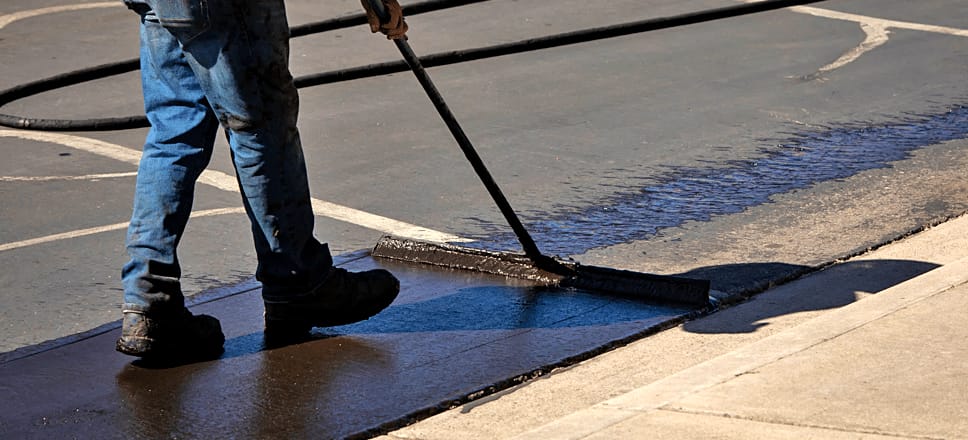
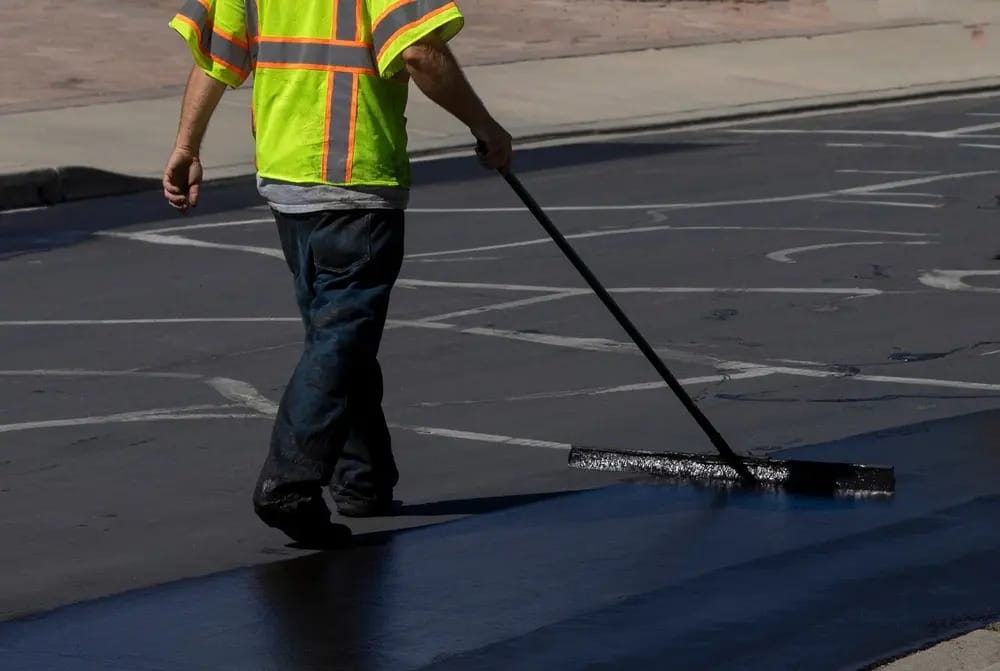
4) Application method: Depending on the lot, we use squeegee, spray, or a combination. Squeegee application first forces material into the asphalt pores, then a spray coat can be added for uniform appearance. We protect sidewalks, curbs, and garage doors with shields and tape so sealer only ends up where it belongs.
5) Curing and reopening: Sealcoat must cure, not just dry to the touch. In typical Spokane summer weather, light traffic is often allowed after 24 hours, though shaded or cool areas can require more time. We set realistic reopening times and, for busy properties, can schedule work in sections so you always keep some parking open.
Materials We Use and Options You Can Choose
Not all sealcoat products react the same to Spokane’s temperature swings and winter maintenance. Precision Asphalt Spokane selects materials based on how your lot is used and what you prioritize: appearance, longevity, or minimal downtime.
We primarily use refined tar and asphalt emulsion sealers formulated for commercial traffic. Both are mixed to manufacturer specs with water, sand, and additives. Sand load matters because it adds skid resistance and abrasion resistance against plow blades and studded tires. On high-traffic drive lanes and drive-thru loops, we typically use a higher sand content. On low-traffic residential or light-use lots, a lighter blend may be appropriate to balance cost and appearance.
Additives can help the sealer cure faster or resist gasoline and oil. For convenience stores, restaurants, and other properties with frequent fuel or oil drips, we discuss gas-resistant additives and spot-repair strategies. For properties that need fast reopening such as medical offices or small retail centers, we can use fast-drying formulations when temperatures and humidity allow.
Color is generally the standard jet-black finish, but how it looks long term has more to do with preparation and traffic levels than the product label. We are honest about what you can expect. A heavily used Spokane Valley retail lot will not look the same two winters later as a small office lot near downtown, even with the same material, so we set realistic expectations and maintenance schedules.
What Drives the Cost of Parking Lot Sealcoating
Precision Asphalt Spokane prices parking lot sealcoating based on actual conditions, not just square footage. Several factors change the cost and we explain each one before work starts.
Surface condition: A newer, uncracked surface that only needs cleaning and a straight sealcoat is less expensive per square foot than an older lot that needs extensive crack sealing, patching, or oil spot removal. Lots with many structural issues may need partial paving before sealcoating is worth doing.
Layout and access: Wide open lots are more efficient for our crews and equipment. Tight courtyards, heavy landscaping, or lots broken into many small sections take longer. Complex traffic control, temporary signage, and phasing to keep businesses open can add cost, but they also keep your tenants happy and avoid confusion.
Coats and materials: Single-coat applications cost less but are often not ideal for high traffic or previously uncoated lots. Many Spokane commercial lots benefit from two coats, especially if plows or frequent truck traffic are involved. Specialized additives, higher sand loads, and premium crack sealants increase initial cost, but often extend the time between major maintenance cycles.
Timing and season: We schedule most large sealcoating projects in late spring through early fall when overnight lows are warm and rain is less frequent. Trying to force sealcoat in marginal weather often leads to issues, so if conditions are not right, we may reschedule rather than risk a poor cure.
Ongoing Parking Lot Maintenance, Not Just One-Time Work
Sealcoating is one part of a longer maintenance plan. Precision Asphalt Spokane helps you map out what your parking lot will likely need over the next 3 to 10 years so you can budget responsibly instead of reacting to emergency failures.
We typically recommend crack sealing as soon as cracks reach about a quarter inch wide, not waiting for your next full sealcoat cycle. Addressing them early is particularly important in Spokane’s freeze-thaw climate, where repeated cycles in late fall and early spring quickly turn small cracks into potholes.
We also offer localized patching (skin patches or full-depth repairs) where subgrade or base failures are visible. Sealcoat should never be used to hide structural problems. We cut out failed areas, fix the base if needed, and place new asphalt that ties into the surrounding mat. Once those repairs have cooled and set, they can be sealed along with the rest of the lot.
Re-striping is usually done after sealcoating, which gives you a chance to improve layout. We can adjust stall widths, reconfigure accessible parking, and improve traffic flow around dumpsters and loading zones. Small design changes often reduce congestion and fender-benders more effectively than new signage alone.
What Spokane Property Owners Should Know Before Hiring
Before you hire anyone for parking lot sealcoating in Spokane, there are a few practical checks that protect your property and your budget. Precision Asphalt Spokane encourages you to ask these questions of us and any contractor you consider.
Ask about surface prep in detail. If the plan is to “blow it off and seal it,” expect adhesion problems. You should hear specifics about mechanical cleaning, crack routing or cleaning, and oil spot treatment. Also confirm that crack filling is done with hot applied rubber, not just sealcoat brushed into a crack.
Verify timing and traffic management. Your contractor should explain how long sections will be closed, how customers or tenants will be routed, and what happens if weather changes mid-project. In Spokane it is common to get sudden showers, especially in spring. We plan for backup dates so you are not left with a half-finished lot.
Discuss warranty and realistic life expectancy. A well-prepared sealcoat job in our area typically lasts 3 to 5 years, depending on traffic and plowing practices. Anyone promising 10 years of performance from one sealcoat is not being straightforward. We also explain how your plowing contractor should set blades and use rubber edges where possible to reduce premature wear.
Finally, ask for recent local references with similar use types, such as office parks, HOAs, churches, or retail centers in Spokane and the surrounding communities. You should be able to see how the work has held up through at least one winter. That is the most honest test of quality in this climate.