Home › Industrial and Heavy-Duty Asphalt Paving
Handle heavy truck traffic with industrial asphalt paving in Spokane, WA. We design and build thicker pavements, reinforced bases, and properly sloped surfaces for loading docks, yards, and warehouse aprons. Our team understands the demands of forklifts, trailers, and constant turning loads. Request an industrial asphalt paving assessment tailored to your operations and site conditions.
Precision Asphalt Spokane provides professional industrial asphalt paving throughout Spokane, WA, Washington and the surrounding area. Our licensed, insured crew delivers safe, clean, on-time work with a free estimate before anything begins. Call or request your free quote.
Industrial Asphalt Paving for Spokane’s Heaviest Use Sites
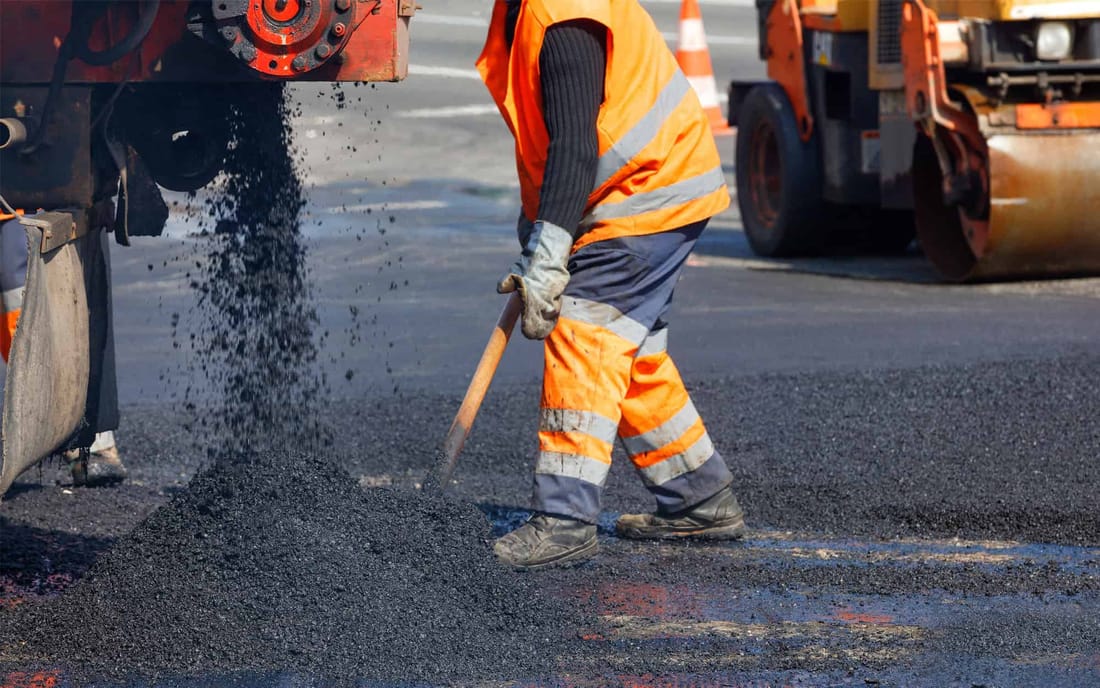
Precision Asphalt Spokane provides industrial asphalt paving built for forklifts, loaded semis, tracked equipment, and nonstop traffic across Spokane and the surrounding communities. Our work focuses on sites where failure is costly and unsafe, such as manufacturing yards, distribution centers, mills, waste transfer stations, and heavy commercial parking lots.
Industrial asphalt paving is different from standard commercial paving. We design thicker sections, stronger base layers, and load-specific layouts that fit your actual operations. That might mean reinforced loading zones at dock doors on Trent Avenue, thicker drive lanes where truck turning is tight in Spokane Valley, or cold-weather mix designs that handle winter freeze-thaw near the Spokane River.
Every project starts with an on-site walk of your facility. We look at drainage patterns, existing pavement performance, traffic routes, truck types and loading cycles. That field information shapes the pavement design, so your new asphalt does not just look smooth on day one, it handles years of real industrial use in Eastern Washington’s climate.
How We Design Heavy-Duty Asphalt Pavement Structures
For industrial asphalt paving to hold up in Spokane, we start with structure, not cosmetics. Precision Asphalt Spokane designs each section based on three main drivers: subgrade strength, traffic loads, and climate.
Subgrade strength is evaluated with test pits or proof rolling. On the West Plains or near Airway Heights, we often see granular soils that can carry substantial loads with proper compaction. Closer to the river and in older industrial areas, we may find pockets of soft or silty soils. In those areas, we either undercut and replace poor soils or use thicker base rock to bridge them.
Traffic loads are not just truck counts, they are axle weights, turning patterns, and stopping zones. Loading docks, fuel islands, and dumpster pads often require thicker asphalt and base than drive-through lanes. For many Spokane industrial sites, we recommend a multi-layer section, for example, 4 to 6 inches of hot mix asphalt over 6 to 12 inches of crushed base, adjusted after we see soils and usage.
Climate affects mix selection and joint details. Spokane’s freeze-thaw cycles and deicing practices are hard on pavement. We typically specify mixes with quality aggregates, proper air voids, and good binder content to resist cracking and raveling. Where heavy truck turning is constant, we may tighten joint spacing, increase surface course thickness, or recommend adding a concrete pad in ultra high stress points like stationary compactor locations.
Step-by-Step Process: From Demo to Final Roll
Industrial asphalt paving is a sequence of critical steps. Skipping or rushing any one of them can shorten the life of the pavement by years. Precision Asphalt Spokane uses a documented process on every heavy-duty project.
First, we handle demolition and removal. Existing asphalt or concrete is saw cut, broken, and hauled to an approved recycler or disposal site. We separate reusable crushed material when possible to reduce trucking and cost.
Second, we prepare and compact the subgrade. We strip organics, proof roll with loaded trucks or rollers, and identify any pumping or soft spots. Soft areas are undercut and replaced with structural fill so they do not turn into future potholes.
Third, we install the crushed rock base. For heavy-duty industrial work, base rock is typically 3/4 inch minus or similar, placed in lifts and compacted to specified density. We shape the base to create positive drainage so surface water moves to catch basins or swales instead of pooling where trucks park.
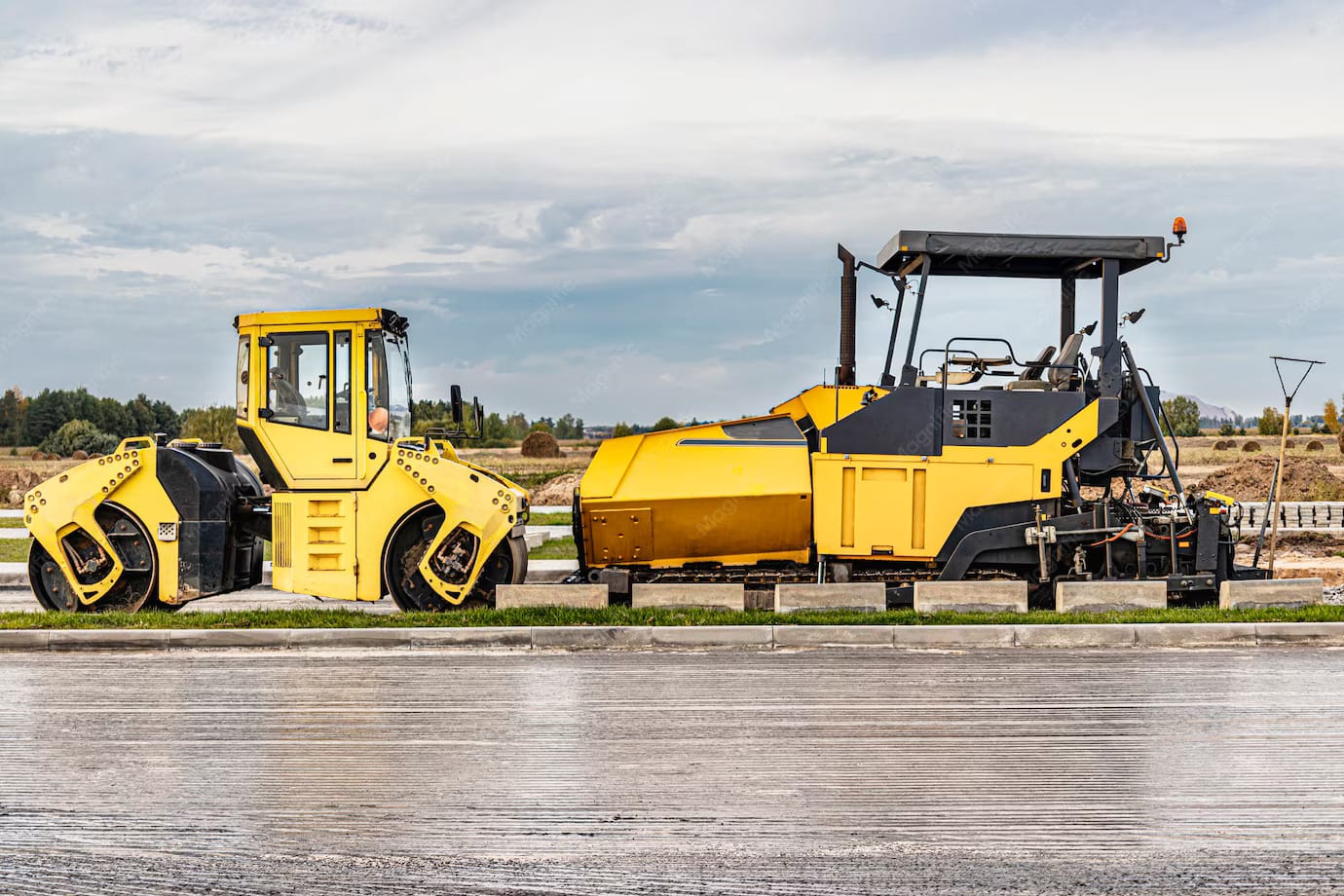
Fourth, we place the asphalt in one or more lifts. On thicker sections we usually install a base lift and a surface lift. Each lift is laid with a paver, compacted with steel drum and pneumatic rollers, and checked for smoothness and density. For Spokane’s colder months, we monitor temperatures closely so asphalt is not placed below recommended thresholds.
Finally, we finish with striping, signage, and site clean up. For facilities that must stay open, we phase the work so critical routes remain accessible, often working in sections or during off-peak hours to minimize disruption.
Material and Layout Options for Heavy-Duty Sites
Industrial asphalt paving is not one size fits all. Precision Asphalt Spokane offers several material and layout options to match how your facility really operates.
We can vary asphalt mix types between zones. For example, a slightly coarser surface mix in high traction, heavy turning areas, and a tighter mix in main drive aisles that need smoother travel. In areas with frequent fuel spills or hot tires, we may recommend a stiffer binder grade for better rut resistance.
Layout decisions often have greater impact on life cycle than mix tweaks. We can widen truck radii to reduce edge cracking, add reinforced loading strips in front of docks, or create separate truck and passenger car paths to keep light-duty areas from having to carry semi loads. Where forklifts cross from interior slabs to exterior pavement, we adjust grades to minimize edge drop-offs and joint pounding.
Drainage accessories also matter. If your North Spokane yard currently has standing water, we can reprofile grades, add trench drains at dock doors, or install additional catch basins. Proper drainage reduces freeze-thaw damage and surface raveling, especially where meltwater repeatedly refreezes in winter.
We also coordinate with your operations team on striping layouts, trailer parking schemes, and staging areas so the finished pavement supports efficient daily use, not just truck access from the street.
What Drives Cost on Industrial Asphalt Paving in Spokane
Pricing for industrial asphalt paving depends on more than square footage. When Precision Asphalt Spokane prepares a proposal, we explain the main cost drivers so you can make informed decisions.
Existing conditions are usually the biggest variable. Thick old concrete, deep failures, or unsuitable subgrade increase removal and base costs. On the other hand, if an existing section is sound and only needs strengthening, we may be able to mill and overlay instead of full reconstruction, which reduces cost.
Section thickness and base depth significantly affect price, but under building them to save money is rarely worthwhile. We often present two or three structural options with expected performance ranges so you can see the real value of upgrading thickness in heavy use zones.
Access, phasing, and operational constraints also matter. Working around active loading docks, tight alleys, or 24-hour operations in Spokane’s industrial corridors can require night work, additional traffic control, or smaller equipment, all of which impact cost and schedule.
Season and schedule play a role too. Spokane’s paving window is mostly April through October, with the most reliable conditions from late May to early October. Paving very late in the season can require more intensive temperature monitoring and tighter time windows, which may affect pricing. Booking larger industrial projects earlier helps avoid schedule bottlenecks during peak months.
Common Industrial Pavement Problems and How We Prevent Them
Industrial pavements in Spokane see predictable patterns of distress, which we design against from the start. Precision Asphalt Spokane has rebuilt yards and loading areas that failed prematurely, and we use those lessons to improve new designs.
Rutting and shoving often show up in heavy braking or turning zones. We minimize this by using appropriate mix designs, specifying sufficient surface thickness, and improving subgrade support. Where trucks repeatedly twist in place, we may recommend joint layout changes or even strategic use of concrete slabs to work with the asphalt, not against it.
Edge cracking is common along dock walls, trailer parking edges, or where trucks track too close to pavement boundaries. We reduce this by thickening edges, using saw-cut and compacted joints, and, when practical, adjusting striping to pull vehicle paths away from unsupported edges.
Drainage-related failures, such as alligator cracking around low spots, come from water infiltration and freeze-thaw cycling. We address this by correcting slopes, sealing joints and edges, and using proper base materials that drain and compact well in our local climate.
Finally, neglecting maintenance shortens pavement life. We typically provide a maintenance plan for industrial clients that includes routine crack sealing, timely patching of isolated failures, and, when appropriate, sealcoating in lighter duty zones. Scheduled maintenance is far cheaper than repeated structural repairs.
Planning, Permits, and Working Around Your Operations
Industrial asphalt paving projects succeed when they are planned around your operations from the outset. Precision Asphalt Spokane meets on site with your facility or property manager to map truck routes, emergency access, busy shifts, and any safety constraints.
We create phased plans that keep fire access routes and key loading doors open, usually by dividing the project into sections completed on different days or weekends. For facilities along major Spokane corridors, we coordinate any required traffic control, temporary signage, and flagging.
Depending on project scope and location, permits or utility coordination may be required. We identify potential conflicts with utilities, such as shallow drainage lines or utility vaults, and plan protection or adjustment in advance. For sites that tie into public streets, we work within Spokane or Spokane County requirements for approaches and right-of-way work.
Before paving begins, we provide a clear schedule, staging maps, and communication plan so your drivers, tenants, and staff know what to expect. Our goal is a durable industrial pavement that supports your operation with minimal interruption during construction and a clear roadmap for how to protect that investment in the years ahead.