Home › Asphalt Sealcoating & Crack Filling
Shield your driveway from sun, water, and deicing chemicals with asphalt sealcoating in Spokane, WA. We clean the surface, route and fill cracks, then apply a uniform protective sealer. Regular maintenance prevents small issues from turning into costly repairs and keeps your driveway looking freshly paved. Book your seasonal driveway sealcoating and crack filling service today.
Precision Asphalt Spokane provides professional asphalt sealcoating throughout Spokane, WA, Washington and the surrounding area. Our licensed, insured crew delivers safe, clean, on-time work with a free estimate before anything begins. Call or request your free quote.
Asphalt sealcoating in Spokane that fits our climate
In Spokane, asphalt lives through hot, dry summers, freeze-thaw cycles, and winter plows. That combination is tough on driveways and parking lots. Precision Asphalt Spokane uses asphalt sealcoating and crack filling to slow that damage way down and keep your surface looking clean and professional.
Sealcoating is a thin protective layer that goes on top of your existing asphalt. It blocks UV rays that dry out the pavement, keeps water and de-icer from soaking in, and gives you a tighter, smoother surface that is easier to sweep and plow. Crack filling targets individual cracks so water cannot get under the pavement and break it apart when it freezes.
In our area, the work window is limited. For sealcoating to bond properly, we plan projects when pavement temps are warm, nights are above about 50 degrees, and rain is not in the forecast. Around Spokane that typically means late April through September. If a contractor tells you sealcoating in cold or wet conditions is fine, that is a red flag. Timing matters as much as materials if you want the job to last more than one season.
How Precision Asphalt Spokane actually performs sealcoating
A good sealcoat job is mostly in the prep. When we arrive, we start by walking the entire driveway or parking lot with you. We flag concerns like soft spots, standing water, oil-saturated areas, and trip hazards. Then we set a plan for traffic control and access so customers or residents still know how to get in and out while the surface cures.
Surface prep is next. We power blow the pavement, wire-brush or mechanically scrub stubborn dirt, and remove vegetation from edges and cracks. Any loose rock, peeling sealer, or crumbled asphalt is scraped off so we are not coating over debris. Oil or fuel spots are treated with a primer so the sealer will bond instead of peeling.
For the sealcoat mix, Precision Asphalt Spokane uses commercial-grade asphalt emulsion sealer, usually with sand added for traction and wear resistance. Sand not only improves skid resistance in winter but also thickens the film so you get more protection per coat. We adjust the mix ratio to match the pavement age and traffic; heavier traffic near entrances and drive lanes gets a slightly stronger blend.
Application is done by spray, squeegee, or a combination, depending on the job. Driveway edges and tight corners are usually hand squeegeed for a clean border, then the larger areas are sprayed for even coverage without ridges. Most residential driveways get two coats, applied in different directions to avoid streaks. For commercial lots we may vary the number of coats by zone; high-traffic lanes get extra attention.
We finish by taping or coning off entrances and clearly telling you cure times. In Spokane, with our cooler nights, we usually recommend at least 24 hours before light car traffic and longer for heavy trucks or trailers. Shade, humidity, and wind all affect dry times, so we adjust recommendations to the actual conditions that day.
Crack filling steps and materials that actually hold up
Crack filling is not just squirting black material into a gap. If the crack is not cleaned and shaped correctly, it will simply peel out during the first freeze. Precision Asphalt Spokane uses a multi-step process designed for our freeze-thaw swings.
We start by sizing the cracks. Hairline surface checking is handled by the sealer itself, but anything about the width of a credit card or larger needs its own treatment. Working cracks that open and close with temperature are usually filled with hot pour rubberized crack sealant. Wider structural cracks or areas where the base has failed may need patching instead of just sealing; we will walk you through that difference on site.
Before we apply any material, we clean each crack using high-pressure air and, when needed, mechanical routing. Routing widens and squares off the top of the crack, which gives the rubber more surface to grab onto. It looks like a shallow groove along the crack line. Not every crack needs routing, but where movement is expected, routing makes the repair last longer.
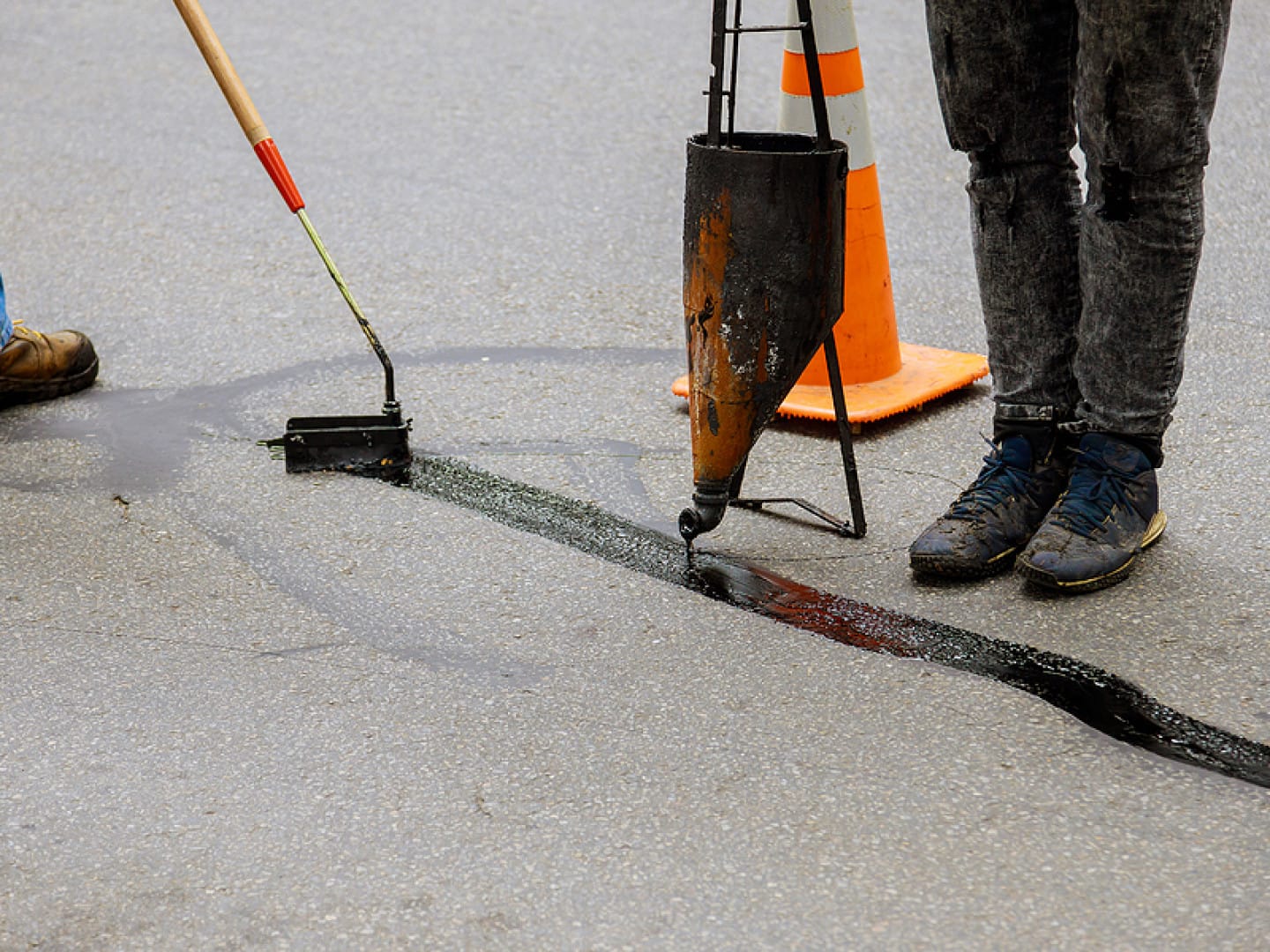
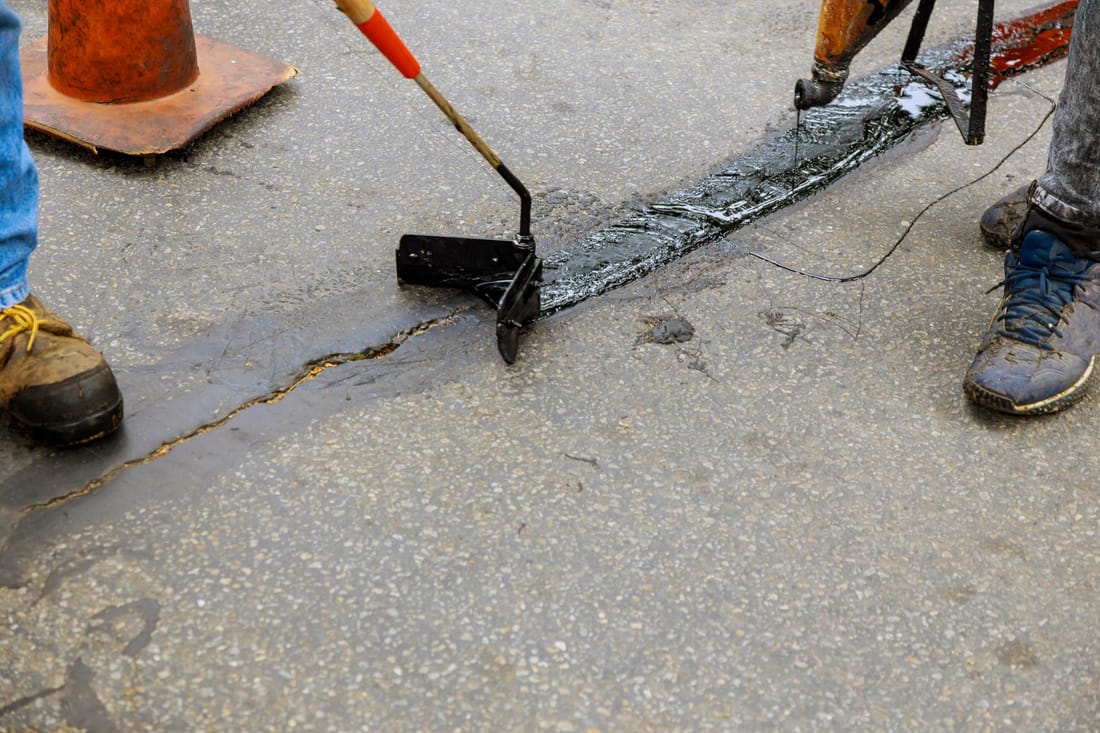
Once the crack is clean and dry, we heat rubberized crack sealant in a kettle to the manufacturer-specified temperature. The hot material is then poured or applied with a wand slightly above the pavement surface and struck off to create a smooth, slightly overfilled band. As it cools, it settles and bonds to the asphalt. On commercial lots, we often band the crack an inch or two on each side to add strength where tires cross.
Crack filling is usually done before sealcoating. After the rubber cools, we allow the material to set, then apply the sealer over and around it. This ties everything together and protects the repaired areas from UV and moisture. The result is a more uniform appearance and a surface that can flex through Spokane winters without splitting open again right away.
Costs, scheduling, and what affects your price
Sealcoating and crack filling costs in Spokane are driven by several real factors, not just square footage. When Precision Asphalt Spokane prepares a quote, we look at the pavement age, number of cracks, previous coatings, and how the surface drains.
Square footage is the starting point, but a clean, newer driveway with only a few cracks will cost less per square foot than an older parking lot with heavy alligator cracking and a thick layer of dirt and moss. Extensive prep, routing, and oil-spot treatment add labor and materials. If there is a lot of old sealer failing or flaking off, we may need to do more scraping and cleaning so we are not sealing over a problem.
Access and layout affect pricing too. A wide, open lot is faster to coat than one broken up by islands, loading docks, and tight corners. Areas that require hand application instead of spray take longer. If your property is on a slope or has poor drainage, we may recommend small grading or repair work around low spots before sealing so water does not sit and break down the new coating.
Timing can save you money. We often group Spokane neighborhood jobs on the same day to cut down on travel and setup time. If you are flexible on schedule, we can sometimes offer better pricing by batching your project with others nearby. On commercial sites, planning around business hours or setting up night or weekend work can also be more efficient if it allows us to coat larger areas at once without moving cars around repeatedly.
Before you commit, we are upfront about what sealcoating can and cannot do. It will not fix serious base failures, big potholes, or major drainage issues. In those spots, we may suggest patching or replacement first, then sealing the entire area afterwards so you are not spending money on a coating that will fail over a weak base.
What Spokane property owners should know before hiring
Not every sealcoating job in Spokane is done with the same care. When you compare Precision Asphalt Spokane to other contractors, there are a few specific questions you should ask any company you are considering.
Ask what type of sealer they use and how it is mixed. A contractor should be able to tell you whether it is an asphalt emulsion or something else, what additives they use, and whether sand is included. If the mix sounds overly watered down, you may be getting a thin coat that will not hold up more than a season or two.
Ask how many coats they are bidding and whether crack filling is included or a separate line item. A single thin coat on a busy parking lot usually is not enough. At the same time, paying for extra coats on pavement that is near the end of its life may not be a good investment. You want a contractor who will actually look at your asphalt and tell you which areas deserve the most attention.
Scheduling is another key point. In Spokane, you want your job scheduled in a dry stretch with mild temperatures. If a company is willing to apply sealer right before a forecasted rain or on barely warm pavement, that is a sign they are prioritizing speed over durability. We routinely reschedule if the weather shifts, because a failed job helps no one.
Finally, discuss traffic control and line striping ahead of time. For commercial lots, we can phase the work so half the lot remains open, coordinate with your tenants, and return to re-stripe after the sealer cures. For residential driveways, we help you plan where to park cars and trailers while the surface is off limits. A little planning up front avoids last-minute surprises and keeps the project stress low while still giving your pavement the protection it needs for Spokane’s winters and summers.