Home › Asphalt Resurfacing & Overlays
Refresh your worn driveway with asphalt resurfacing in Spokane, WA instead of starting from scratch. We repair problem areas, mill high spots, and install a new overlay for a smooth, uniform finish. Resurfacing can add years of life at a lower cost than full replacement when the base is still strong. Request a driveway evaluation to see if an asphalt overlay is right for your home.
Precision Asphalt Spokane provides professional asphalt resurfacing throughout Spokane, WA, Washington and the surrounding area. Our licensed, insured crew delivers safe, clean, on-time work with a free estimate before anything begins. Call or request your free quote.
Asphalt Resurfacing & Overlays in Spokane, WA
When asphalt in Spokane starts to crack, ravel, or feel rough but the base is still sound, resurfacing and overlays are usually the most cost‑effective way to restore it. Precision Asphalt Spokane focuses on this middle ground between simple patching and full tear out and replacement.
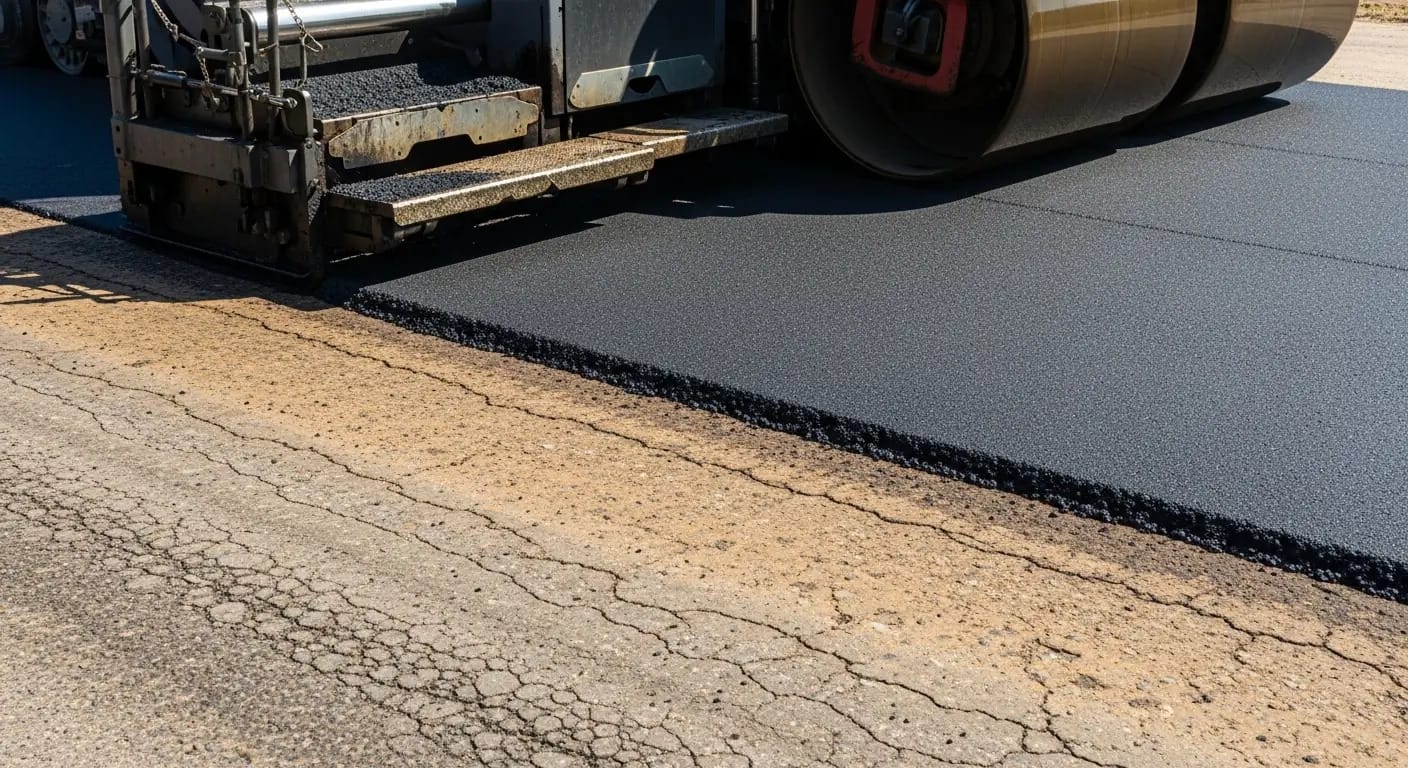
Asphalt resurfacing means grinding or cleaning the top of your existing pavement, fixing structural problems, then installing a new asphalt layer over the top. Customers in Spokane commonly use this approach for driveways, parking lots, private roads, HOA streets, and light‑duty commercial areas that are 10 to 25 years old.
We pay close attention to Inland Northwest climate issues. Spokane winters create freeze‑thaw cycles and deicer use that accelerate surface damage. The goal of resurfacing is to seal out water, correct surface deformation, and provide a new, smooth wear course without paying for full reconstruction.
Precision Asphalt Spokane will tell you honestly when resurfacing is appropriate and when a full replacement is the better investment. If the base is pumping mud or the asphalt flexes noticeably under traffic, we will discuss those findings with you on site before you commit to any overlay work.
Step‑by‑Step: How Our Resurfacing & Overlay Process Works
The resurfacing process is only as good as the preparation. Precision Asphalt Spokane uses a defined sequence so your overlay bonds correctly and drains properly.
1. Site evaluation and measurements
We begin with a walk of your property, noting cracks, dips, standing water, and high‑traffic wheel paths. We measure the area with a wheel or tape, not just satellite tools, so we account for curves, islands, and odd shapes that change material quantities.
2. Structural repairs before the overlay
Soft spots, potholes, and alligatored areas are cut out with a saw or milling machine, then excavated to stable material. We backfill with crushed rock if needed, compact it in lifts, and install new base asphalt. This prevents old failures from reflecting through your new surface in the first couple of winters.
3. Edge preparation and cleaning
We clean the surface with high‑powered blowers and sometimes brooms, trimming grass off edges so the new overlay can be tied in cleanly. Oil‑soaked areas are treated or removed so the new asphalt will adhere. Catch basins, manholes, and valve cans are located and marked so we maintain proper height around them.
4. Milling or leveling where needed
In areas where we need to maintain curb reveal, garage clearances, or transitions to city streets, we perform localized milling (grinding) to remove some of the old asphalt before installing the overlay. For wavy or rutted surfaces, we use a leveling course of asphalt to even out the plane before the final surface lift.
5. Tack coat and new asphalt placement
A tack coat emulsion is sprayed over the old pavement to bond the new asphalt to the existing surface. We then place hot mix asphalt with a paver for larger areas or by hand in tighter residential spaces. Typical overlay thickness in Spokane is 1.5 to 2 inches for driveways and up to 2.5 inches for heavier traffic lots.
6. Compaction and detail work
Steel drum and pneumatic rollers compact the new mat to the required density. Our crew hand works around drains, edges, and concrete interfaces so you do not end up with trip lips or low areas that collect water. We paint temporary markings if needed and schedule final striping after the asphalt has cooled.
Material Options and Overlay Types for Spokane Properties
Not every overlay is the same. Precision Asphalt Spokane discusses mix design and overlay style with you so the finished product fits how the surface is actually used.
Standard hot mix overlays
For most Spokane residential driveways and small lots, a conventional hot mix asphalt overlay with 3/8 inch or 1/2 inch aggregate is appropriate. It handles passenger vehicles well, plows cleanly, and is cost efficient. We typically recommend at least 1.5 inches compacted thickness so the surface can survive Spokane winters and sanding.
Leveling course plus surface course
For older parking lots that have years of patching and rutting, we often propose a two‑step overlay. First, a leveling course fills ruts and evens out patch edges. Second, a uniform surface course is installed over the entire area. This is especially useful near loading areas, drive lanes, and dumpster approaches where the pavement has settled inconsistently.
Geotextile fabric overlays
On pavements with a lot of minor cracking but an otherwise strong base, we may recommend paving fabric between the old asphalt and the new overlay. The fabric is placed over a heavy tack coat, then paved over. It can slow down reflective cracking caused by Spokane freeze‑thaw cycles and extend the life of the overlay.
Driveway vs commercial lot considerations
Residential driveways usually prioritize smoothness, clean edges, and matching garage thresholds. Commercial and HOA projects focus more on traffic flow, snowplow impact, truck loading, and striping layout. Precision Asphalt Spokane adjusts mix type and thickness accordingly, and we will explain which option you are getting and why.
What Drives the Cost of Asphalt Resurfacing in Spokane
Two driveways or lots can look similar at a glance but have very different resurfacing costs. Precision Asphalt Spokane breaks out these factors clearly so you understand the estimate.
Surface area and shape
Total square footage is the primary cost driver because it dictates how much asphalt is needed and how long the crew needs to be on site. Tight curves, islands, and multiple tie‑ins to concrete or gravel also add time and hand labor.
Amount of pre‑overlay repair
If we find failed base sections, heavy alligator cracking, or large potholes, those areas must be cut out and replaced before the overlay. This work is more labor intensive than simply paving over a sound surface, and it shows as a separate line item in our proposals.
Thickness and mix type
Thicker overlays and specialty mixes, such as higher polymer or higher oil content mixes for heavy traffic, cost more per square foot. For many Spokane homeowners, a standard thickness and mix is suitable. For commercial sites or areas that see delivery trucks, we will talk through the tradeoff between extra thickness and long‑term durability.
Access, staging, and traffic control
Narrow driveways, limited truck access, or the need for flaggers and cones can increase cost. Apartment complexes, medical offices, and busy retail lots often require phasing work to keep some parking open, which means more mobilizations. We plan these logistics with you ahead of time so there are no surprise charges after work begins.
Time of year and scheduling
In Spokane, asphalt plants typically operate from spring through fall. Shoulder season work in cooler temperatures can still be done, but it may require tighter crew timing to ensure proper compaction, which can factor into pricing. We will advise you if your requested timing affects cost or quality.
Common Spokane Overlay Problems and How We Prevent Them
Asphalt resurfacing can fail early if it is rushed or done without regard to local conditions. Precision Asphalt Spokane focuses on avoiding the issues we see most often around Spokane.
Reflective cracking
If cracks in the old pavement are not properly treated, they can show up again in the new overlay within a couple of seasons. We thoroughly clean and route significant cracks, then fill them with appropriate crack sealant before the overlay. For pavements with widespread small cracking, we may recommend a paving fabric or a thicker overlay to reduce reflection.
Poor drainage and birdbaths
Overlaying without correcting slope problems just locks in existing puddles. On your walkthrough, we look for standing water, stained areas, and low spots. Our crews adjust grades with milling or leveling course to get water moving toward drains, swales, or the street. After paving, the foreman checks with a straightedge and visual inspection before leaving the site.
Height issues at garages and curbs
Adding new asphalt raises the surface. If this is not planned, you can end up with reduced curb reveal or a bump into your garage. Precision Asphalt Spokane checks critical thresholds, including garage slabs, ADA ramps, and city sidewalks. We may mill at transitions or taper the overlay to maintain proper heights and avoid trip hazards.
Raveling or loosening surface
Raveling often comes from paving on dirty or oily surfaces or from inadequate compaction. We invest time in cleaning and tack coating, then use the right size and number of rollers for the job. Our crews know Spokane plant mix designs and how quickly they cool in our climate, and they time compaction accordingly.
Snowplow and winter abuse
We recognize that Spokane surfaces see frequent plowing and sanding. For commercial and HOA clients, we can discuss recommendations for plow blade shoes and angle of attack, and we design joint locations and edges so they are less vulnerable to being caught by blades.
What Spokane Property Owners Should Know Before Hiring
Choosing the right contractor for asphalt resurfacing in Spokane is as important as the choice between overlay and full replacement. Precision Asphalt Spokane encourages you to ask specific questions so you know what you are getting.
Ask about base evaluation
A contractor who is not interested in what is under the surface is a red flag. Make sure your estimate explains how they will identify and repair soft spots before the overlay. We document areas of concern on a site plan so you can see where money is being spent.
Confirm thickness and scope in writing
Your proposal should state the planned overlay thickness, locations of cut‑outs, use of leveling course, and any milling work. We list these details clearly so if you compare multiple bids, you are comparing the same scope of work, not just the bottom line.
Check familiarity with local standards
In Spokane, tie‑ins to public streets or work in the right‑of‑way may require coordination with the City of Spokane, Spokane Valley, or Spokane County. For commercial and multi‑family projects, you may have fire lane and ADA striping requirements. Precision Asphalt Spokane is familiar with typical local expectations and can coordinate with your property manager or HOA board.
Discuss traffic downtime
Resurfaced areas usually need to stay closed to traffic for 24 to 48 hours, depending on temperature and use. We will outline a traffic control and phasing plan so residents, employees, or customers are not caught off guard. For driveways, we help homeowners plan vehicle parking and access during curing.
Plan for future maintenance
An overlay is not the end of maintenance but a reset point. In Spokane, we generally recommend crack sealing as cracks appear and periodic sealcoating on lower‑traffic surfaces to protect your investment. When we complete your project, we can provide a simple written maintenance outline tailored to your specific pavement so you know what to budget for and when.